
The Rabbit Motif
The Death of Bunny MunroThis flow traces rabbit imagery as a shifting emblem of Bunny’s comic persona, salesmanship, family bond, and approaching death.
increasing Bearing strength in each event
 decreasing
Bearing strength in each eventdecreasingThe Rabbit Introduction
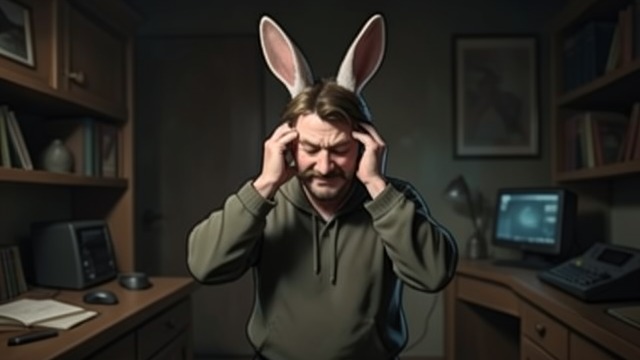
The Rabbit Introduction
A name made into a trick
Bunny presents his nickname with rabbit ears made by his hands and a snuffling noise. The gesture makes his identity playful and immediately recognizable.
Performance begins
The rabbit routine is one of several tools Bunny uses to charm strangers. It turns a name into a persona, helping him avoid showing more vulnerable parts of himself.
The Rabbit Salesman
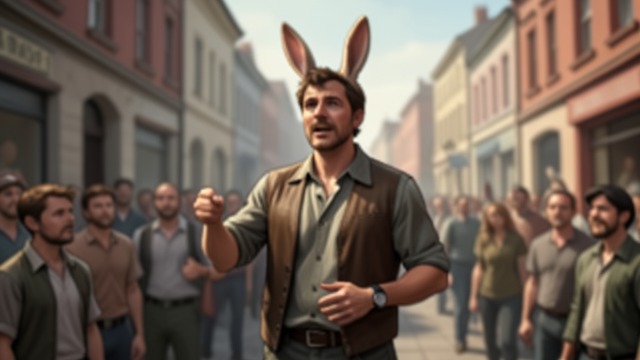
The Rabbit Salesman
A familiar performance
Bunny repeats the rabbit-ears routine while pitching products and introducing himself. The gesture helps him control a conversation by making his odd name memorable.
A symbol of constructed charm
The comic pose works because Bunny can turn embarrassment into confidence. Its lightness contrasts with the serious consequences of his behavior outside the performance.
Rabbits on the Tie
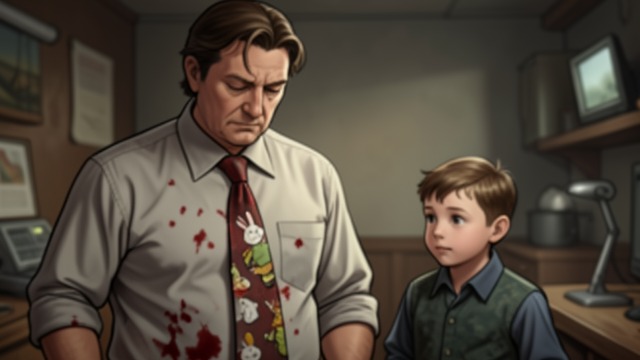
Rabbits on the Tie
A gift marked by family
Bunny wears a tie with cartoon rabbits that Libby gave him. Bunny Junior notices the blood on it after Bunny’s nose is broken.
The object becomes a connection
The tie joins Bunny’s comic identity to the family life he has damaged. To the boy, it is not merely clothing but a reminder of his mother and a sign of his father’s vulnerability.
The Rabbit in the Newspaper
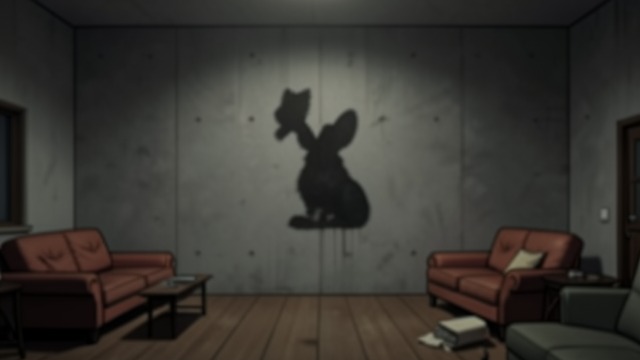
The Rabbit in the Newspaper
An image in the wreckage
Bunny sees urine soak into the newspaper in the hotel room and take the shape of a rabbit. He treats the figure as an uncanny detail in a world that has lost ordinary boundaries.
Motif as warning
The recurring rabbit image links the salesman’s persona to vulnerability and bodily collapse. The familiar comic symbol is now caught in evidence of fear and disorientation.
The Rabbit at Butlins
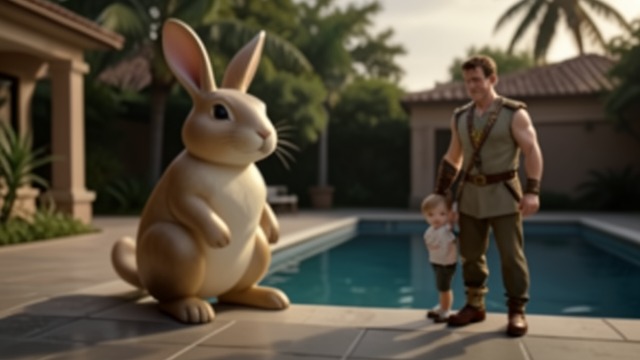
The Rabbit at Butlins
A childhood landmark returns
The giant fibreglass rabbit stands beside the swimming pool where Bunny once met Penny Charade. The old amusement setting draws his boyhood memory into the final scene.
The persona meets the child
Bunny’s rabbit identity ends beside Bunny Junior, who will take the train’s key. The image gathers the distance between a boy who discovered performance and a father who must finally let his son lead.
During Bunny’s first hotel night
During the first day of selling
After the visit to Charlotte’s home
After Bunny’s collision
On the final night at the holiday camp
